
Exploring the World of Cryogenics
Understanding the science, applications, and future of ultra-low temperature phenomena
Introduction to Cryogenics
Cryogenics is a fascinating branch of physics dedicated to the production and study of extremely low temperatures. The term originates from the Greek words "kryos" (meaning cold) and "genics" (meaning to produce), symbolizing its core focus on creating and manipulating cold environments. It plays a vital role in advancing technology, from space exploration to cutting-edge medical treatments.
At the heart of cryogenics lies the study of material properties and behaviors when exposed to temperatures often below -150°C (123K). Such conditions open up unique possibilities, including the development of superconductors, cryopreservation techniques, and the liquefaction of gases.
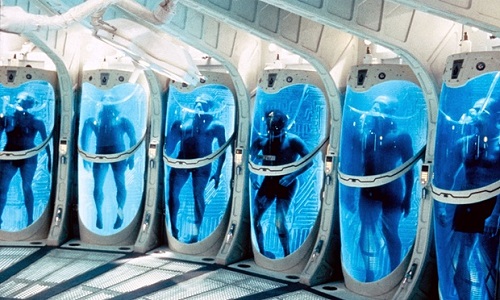
The Science Behind Cryogenics
Cryogenics delves into the behavior of materials and systems at extremely low temperatures, typically below -150°C (123K). This field is grounded in fundamental principles of physics, providing insights into phenomena that occur at or near absolute zero.
Key scientific aspects of cryogenics include:
- Thermodynamics: The study of energy transfer and phase transitions at low temperatures, which helps in the efficient liquefaction and storage of gases like nitrogen, oxygen, and helium.
- Superconductivity: A state where certain materials exhibit zero electrical resistance, enabling advancements in fields like quantum computing and energy-efficient power systems.
- Cryopreservation: Freezing biological materials, such as cells, tissues, and organs, to preserve their integrity for long-term use in medical and scientific applications.
The science of cryogenics has unlocked countless possibilities, transforming our understanding of the natural world and expanding the horizons of technological innovation.
Applications of Cryogenics
Cryogenics has revolutionized numerous industries, offering groundbreaking solutions across various fields. Its ability to manipulate materials and systems at ultra-low temperatures has paved the way for transformative advancements in science, technology, and medicine. Key applications include:
-
Medical Science:
- Cryosurgery: A minimally invasive procedure using extreme cold to destroy abnormal or diseased tissue, including tumors and warts.
- Cryopreservation: Storing biological materials like embryos, stem cells, and blood for future use without compromising their viability.
-
Space Exploration:
- Storing and transporting liquid hydrogen and liquid oxygen as rocket fuels.
- Preserving sensitive instruments and equipment in extreme space environments.
-
Physics and Research:
- Cooling superconducting magnets used in particle accelerators and magnetic resonance imaging (MRI).
- Enabling quantum computing by reducing noise and stabilizing qubits at near-zero temperatures.
-
Industrial Applications:
- Freezing and transporting perishable goods to maintain quality during long-distance shipping.
- Treating metals and alloys to enhance their strength, durability, and resistance to wear.
The versatility of cryogenics continues to inspire innovation, cementing its role as a cornerstone of modern technology and scientific exploration.
Cryogenics and the Quest for Absolute Zero
One of the most intriguing aspects of cryogenics is its relationship with absolute zero, the theoretical temperature at which all molecular motion ceases. Defined as 0 Kelvin (-273.15°C or -459.67°F), absolute zero represents the lowest limit of the thermodynamic temperature scale. While it is impossible to reach absolute zero due to the laws of physics, cryogenics allows scientists to approach this limit closely, unlocking extraordinary phenomena.
At temperatures near absolute zero, materials exhibit unique behaviors, such as:
- Superconductivity: Certain materials lose all electrical resistance, enabling the efficient transmission of electricity without energy loss. This phenomenon is crucial for advancements in quantum computing and magnetic levitation technologies.
- Superfluidity: Liquids like helium transition into a superfluid state, flowing without viscosity. This has significant implications for understanding quantum mechanics and developing advanced cooling systems.
- Minimal Thermal Noise: At such low temperatures, thermal energy is drastically reduced, allowing for highly sensitive measurements and experiments in fields like astrophysics and particle physics.
Cryogenics brings us closer to absolute zero by utilizing techniques like gas liquefaction and adiabatic demagnetization. The pursuit of this ultimate cold continues to drive innovation and deepen our understanding of the universe's most fundamental principles.
An Article on the unattainable quest for absolute zero
Cryogenics and the Science of Controlling Death
Cryogenics has sparked significant interest in its potential to preserve life and even extend it by controlling the process of death. This idea revolves around the preservation of biological tissues, organs, or even entire organisms at ultra-low temperatures to halt decay and cellular degradation. While still largely experimental, this area of cryogenics, often referred to as cryonics, offers a fascinating glimpse into the possibilities of future medicine.
Key aspects of cryogenics related to controlling death include:
- Cryopreservation of Biological Samples: Tissues such as sperm, eggs, and embryos are routinely frozen for later use. This same principle is being explored for preserving organs for transplantation or even reviving individuals who have experienced clinical death.
- Cryonics: The preservation of whole bodies or brains shortly after legal death, with the hope that future medical advancements will enable revival and treatment of currently incurable conditions. While this remains speculative and controversial, the concept is rooted in real cryogenic technology.
- Reversible Death States: Advances in cryogenics have inspired research into inducing reversible states of suspended animation. This could be applied in emergency medicine, allowing for extended time to treat critical injuries or illnesses.
The science of controlling death through cryogenics faces significant challenges, including the damage caused by ice crystal formation during freezing and the ethical questions surrounding its applications. Nevertheless, continued research in this field holds the promise of transformative breakthroughs, potentially redefining our understanding of life and death in the future.
Technological Breakthroughs in Cryogenics
Cryogenics has driven remarkable advancements in technology, making previously unattainable scientific and industrial achievements possible. Several breakthroughs have emerged from the ability to manipulate matter at extremely low temperatures, enabling innovations across various fields.
- Cryogenic Liquids: Liquefied gases such as nitrogen, helium, and oxygen are fundamental to cryogenic applications. These substances are used for cooling, transportation, and scientific research. For instance, liquid nitrogen enables food preservation and biological sample storage, while liquid helium is critical for cooling superconducting magnets.
- Superconductors: Cryogenics has revolutionized the use of superconducting materials, which exhibit zero electrical resistance when cooled to cryogenic temperatures. This technology is pivotal for energy-efficient power grids, magnetic levitation (maglev) trains, and advanced medical imaging systems like MRI scanners.
- Cryocoolers: Compact and efficient cryocoolers provide localized cooling for sensitive scientific instruments and electronics. These devices are widely used in space exploration, quantum computing, and high-performance imaging systems, enabling precise and reliable operations.
These technological breakthroughs illustrate the transformative potential of cryogenics, driving progress in energy efficiency, medical advancements, and cutting-edge research.
Challenges in Cryogenics
While cryogenics has led to groundbreaking advancements, it also presents a range of challenges that must be addressed to fully harness its potential. These challenges span technical, material, and safety considerations, which often limit the widespread adoption of cryogenic technologies.
- Cost and Infrastructure: Achieving and maintaining ultra-low temperatures requires highly specialized equipment, such as cryogenic storage tanks and refrigeration systems, which can be expensive to procure and operate. Additionally, the substantial energy demands of cryogenic systems contribute to operational costs.
- Material Properties: Extreme cold can alter the physical properties of materials, making them brittle or less functional. Developing materials that remain durable and effective under cryogenic conditions is a critical challenge for engineers and researchers.
- Safety Concerns: Handling cryogenic fluids like liquid nitrogen or liquid helium poses significant risks. Direct contact with these substances can cause severe cold burns, and their rapid expansion into gases can lead to asphyxiation in enclosed spaces or pressure build-up in containers.
Overcoming these challenges requires continued research and innovation in cryogenic engineering, material science, and safety protocols. Addressing these barriers will pave the way for broader and more efficient applications of cryogenic technologies.
Challenges in Cryogenics and Advanced Biotechnology for Human Revival
The intersection of cryogenics and advanced biotechnology presents a tantalizing possibility for human revival and life extension. While the potential is immense, this field is fraught with significant challenges that must be addressed to turn science fiction into reality. These challenges are both technical and ethical, requiring interdisciplinary solutions.
- Preservation Without Damage: One of the biggest hurdles in cryogenics for human revival is avoiding cellular and tissue damage caused by ice crystal formation during freezing. Current cryopreservation techniques often lead to irreversible harm to biological structures, making the prospect of revival extremely complex.
- Revival Mechanisms: Even if tissues or organs can be preserved without damage, developing reliable methods to "restart" life processes in a human body remains a daunting task. This includes restoring cellular function, neural connections, and metabolic processes after thawing.
- Integration with Advanced Biotechnology: Advanced biotechnological tools, such as nanotechnology and gene editing, are being explored to repair damage at the molecular level and enable functional recovery of cryogenically preserved tissues. However, these technologies are still in their infancy and require significant refinement.
- Ethical Considerations: The idea of human revival raises profound ethical questions, such as the implications of extending life indefinitely, the social and psychological effects on individuals and society, and the equitable access to such technologies.
Despite these challenges, the combination of cryogenics and advanced biotechnology holds promise for transformative breakthroughs in medicine and life sciences. Continued research and innovation in these areas could one day redefine the limits of human life, offering hope for those seeking solutions to terminal illnesses or even mortality itself.
Cryonics: Your body preserved for future revival?Future Prospects
The future of cryogenics is filled with transformative potential, as ongoing advancements continue to unlock new possibilities across science, technology, and healthcare. By leveraging the power of ultra-low temperatures, cryogenics is poised to drive innovation in several key areas:
- Fusion Energy: Cryogenics plays a pivotal role in enabling controlled nuclear fusion, often referred to as the "holy grail" of clean energy. In tokamak reactors, cryogenic cooling is essential for maintaining superconducting magnets, which confine plasma at extremely high temperatures. This breakthrough could revolutionize energy production by providing an abundant, sustainable, and environmentally friendly energy source.
- Cryogenic Computing: The field of computing is set to benefit greatly from cryogenics. By operating at cryogenic temperatures, quantum computers and high-performance processors can minimize thermal noise, increase stability, and achieve unprecedented computational speeds. This innovation promises to advance fields like artificial intelligence, cryptography, and complex simulations.
- Cryogenics in Healthcare: Cryogenic techniques are being refined to enhance medical applications. Future developments include more efficient and reliable methods for preserving organs, tissues, and cells, as well as innovations in non-invasive cryosurgery for treating various medical conditions. These advancements could revolutionize transplantation, regenerative medicine, and cancer treatment.
As cryogenics continues to evolve, its potential to address critical challenges in energy, technology, and healthcare underscores its importance in shaping a sustainable and innovative future.
Conclusion
Cryogenics stands at the forefront of scientific innovation, offering transformative possibilities across numerous fields, including energy, healthcare, and computing. By exploring the behavior of matter at ultra-low temperatures, we gain deeper insights into fundamental physics while pushing the boundaries of technological and medical advancements.
From enabling controlled nuclear fusion to enhancing organ preservation techniques, cryogenics continues to address some of the most pressing challenges of our time. However, the field also faces significant obstacles, such as the high costs of infrastructure, material limitations, and safety risks. Overcoming these hurdles will require collaboration across disciplines, sustained research, and ethical considerations.
As we look to the future, the potential of cryogenics to reshape industries, extend human life, and revolutionize energy production is both inspiring and profound. With continued innovation, this extraordinary field is poised to make lasting contributions to science and humanity.
Written by Aryan Singh.