
String Theory, Supersymmetry, and N-Dimensionality
Exploring the Multiverse, Time Travel, Heaven and Hell, and the Relativity of Time
Introduction
The universe, vast and enigmatic, has always captured the curiosity of humankind. From the intricate dance of celestial bodies to the quantum mysteries at the heart of matter, there is a profound desire to understand what lies beyond our observable reality. Central to this quest are theories that challenge our perception of existence, such as string theory, supersymmetry, and n-dimensionality.
These concepts, though deeply rooted in advanced physics, have transcended academic circles to inspire popular imagination. They promise answers to some of the most profound questions: What is the fundamental nature of reality? Are we part of a multiverse? Is time truly linear, or can it bend, loop, and fold? Could the age-old notions of heaven and hell be representations of higher dimensions beyond our comprehension?
In this blog, we will delve into these mind-bending ideas, exploring how string theory proposes that vibrating strings of energy form the essence of all matter, how supersymmetry suggests a delicate balance in the universe, and how n-dimensionality expands our understanding of space and time. Along the way, we’ll examine their implications for phenomena like the multiverse, the possibility of time travel, and even philosophical and spiritual concepts.
Let us embark on this journey into the unknown, where science, philosophy, and imagination converge to paint a richer picture of the universe and our place within it.
What is String Theory?
String theory is one of the most ambitious and fascinating ideas in modern physics. At its core, it posits that the fundamental constituents of the universe are not point-like particles, as traditionally thought, but rather tiny, one-dimensional "strings" that vibrate at specific frequencies. These vibrations determine the properties of particles, such as their mass and charge, much like how the vibration of a guitar string determines the note it produces.
The beauty of string theory lies in its potential to unify two seemingly incompatible pillars of physics: quantum mechanics, which governs the microscopic world of particles, and general relativity, which explains the macroscopic structure of spacetime and gravity. Traditional physics has struggled to reconcile these two frameworks, particularly in extreme environments like black holes or the Big Bang. String theory, however, offers a framework where these forces coexist seamlessly, providing a "theory of everything."
The historical roots of string theory date back to the late 1960s, when physicists attempted to describe the strong nuclear force. It wasn’t until the 1980s, during what’s known as the "First Superstring Revolution," that the theory gained widespread attention for its unifying potential. Since then, string theory has evolved into a vast and complex field, spawning numerous variations such as M-theory and Type IIA and IIB string theories. Each offers unique insights into the nature of our universe.
Despite its promise, string theory remains a work in progress. Its mathematical complexity and lack of experimental verification pose significant challenges. Yet, it continues to inspire researchers, offering profound implications for our understanding of dimensions, spacetime, and the ultimate nature of reality.
In the sections that follow, we’ll explore how string theory connects to supersymmetry, higher dimensions, and the tantalizing idea of a multiverse, as well as its philosophical and metaphysical implications.
Supersymmetry: A Perfect Balance
Supersymmetry, often abbreviated as SUSY, is a profound concept in theoretical physics that proposes a unique symmetry between the building blocks of matter and the forces that govern their interactions. At its core, supersymmetry suggests that every fundamental particle in the universe has a corresponding "superpartner" with different intrinsic properties, such as spin.
In the Standard Model of particle physics, particles are broadly classified into two categories:
- Fermions: The matter particles, such as electrons and quarks, that make up everything we see around us.
- Bosons: The force-carrying particles, such as photons and gluons, responsible for mediating interactions like electromagnetism and the strong nuclear force.
One of the most exciting aspects of SUSY is its potential to solve some of the biggest mysteries in physics. For instance:
- Dark Matter: Many SUSY theories predict the existence of stable, neutral superparticles, such as the lightest supersymmetric particle (LSP), which could account for the elusive dark matter that makes up about 27% of the universe.
- Unification of Forces: Supersymmetry helps smooth out inconsistencies in unifying the fundamental forces of nature, particularly at extremely high energies, where they may merge into a single force.
- Hierarchy Problem: SUSY provides an elegant solution to why the Higgs boson mass is much lighter than expected based on quantum corrections, a puzzle known as the hierarchy problem.
Supersymmetry also has a deep connection to string theory. In string theory, supersymmetry is essential for consistency in many formulations, such as superstring theory, which incorporates SUSY to unify gravity with quantum mechanics. Without SUSY, string theory would face mathematical inconsistencies and fail to describe our universe.
While no direct evidence for supersymmetric particles has been found yet, ongoing experiments at particle colliders like the Large Hadron Collider (LHC) continue to search for signs of SUSY. Whether or not it is ultimately proven, supersymmetry remains a cornerstone of modern theoretical physics, offering profound insights into the structure of the universe.
In the context of our discussion, SUSY bridges the gap between the micro and macro scales, playing a pivotal role in the grander theories of higher dimensions and the multiverse, which we will explore in the next sections.

N-Dimensionality: More Than 3 Dimensions
When we think of the universe, our intuition is grounded in the three spatial dimensions—length, width, and height—and the single dimension of time. This four-dimensional framework, often called spacetime, forms the backbone of Einstein's theory of relativity. But what if there are more dimensions hidden beyond our perception?
N-dimensionality refers to the idea that the universe may contain additional dimensions beyond the familiar 3D space and 1D time. These dimensions, while imperceptible to human senses, are a natural extension of mathematical theories that describe the universe at its most fundamental level. For instance, string theory requires the existence of 10 or even 11 dimensions to remain mathematically consistent, with some variations suggesting even higher numbers.
Visualization of Higher Dimensions:
Visualizing dimensions beyond the third can be challenging, but analogies can help:
- Imagine a 2D being living on a flat plane. To this being, the concept of "up" and "down" (the third dimension) would be inconceivable, just as higher dimensions are to us.
- In mathematical terms, a higher-dimensional space can be represented using additional coordinates. For example, a point in 4D space requires four coordinates (x, y, z, w) to define its position.
- Geometric shapes like a tesseract (a 4D hypercube) are projections or analogies of higher-dimensional objects in lower-dimensional spaces.
Mathematical Representation:
Mathematics allows us to describe and manipulate these higher dimensions. In linear algebra, for example, vectors and matrices can operate in spaces of any dimension. Similarly, differential geometry, used in general relativity, provides tools to describe curved spaces and n-dimensional manifolds.
Applications in Physics:
Higher dimensions play a crucial role in explaining complex phenomena:
- Unification of Forces: In string theory, additional dimensions allow for the unification of gravity with quantum mechanics, as the extra dimensions provide "room" for these forces to interact seamlessly.
- Multiverse Hypotheses: Some theories suggest that each "brane" (a higher-dimensional object) in a multi-dimensional space could represent an entirely separate universe, giving rise to the multiverse concept.
- Dark Matter and Energy: Extra dimensions might house particles or fields that interact weakly with our observable universe, potentially explaining dark matter and energy.
Though we cannot directly observe these higher dimensions, their effects might be detectable. For example, experiments at particle colliders, such as the Large Hadron Collider, search for evidence of particles escaping into higher dimensions, which could appear as missing energy in our 4D framework.
In the grander scheme, n-dimensionality challenges us to expand our understanding of reality. It invites us to imagine a universe far richer and more complex than what we perceive, bridging the gap between science and philosophy. As we continue, we’ll explore how these higher dimensions connect to ideas like the multiverse and the very nature of existence itself.

The Multiverse Hypothesis
The multiverse hypothesis suggests that our universe is just one of countless others, each potentially with its own unique properties, laws of physics, and even dimensions. While the idea has been a staple of science fiction for decades, it has gained scientific traction through theories like string theory and n-dimensionality, which naturally accommodate the existence of multiple universes.
How String Theory and N-Dimensionality Support the Multiverse
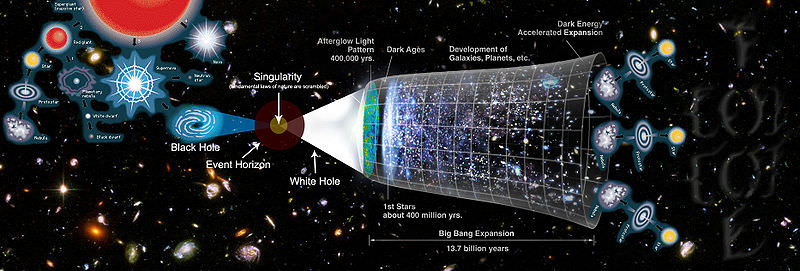
In string theory, the universe we inhabit could be one of many "branes" (multi-dimensional surfaces) floating in a higher-dimensional space. These branes might collide or interact, leading to phenomena such as the Big Bang, which some theories posit as the result of brane collisions. N-dimensionality further suggests that higher dimensions might allow for the existence of multiple independent or interconnected universes within the same overarching framework.
Additionally, string theory's reliance on additional dimensions naturally gives rise to multiple solutions for how these dimensions could be compactified (folded or curled up). Each solution could correspond to a different universe with its own physical constants, such as the speed of light or the strength of gravity.
Types of Multiverse Theories
The multiverse hypothesis encompasses several distinct models, each grounded in different scientific principles:
- Bubble Universes: In eternal inflation theory, the rapid expansion of spacetime gives rise to "bubbles," each forming its own universe. These universes can have different physical constants and properties.
- Braneworlds: Based on string theory, this model envisions our universe as a 3D brane within a higher-dimensional space. Other branes could represent parallel universes, and interactions between branes might explain gravitational phenomena.
- Quantum Many-Worlds: The many-worlds interpretation of quantum mechanics suggests that every quantum decision splits reality into multiple branches, each representing a different outcome.
- Mathematical Universes: This theory, proposed by Max Tegmark, posits that all mathematically possible structures correspond to real universes, expanding the definition of existence itself.
Evidence and Criticisms
While the multiverse is a tantalizing concept, direct evidence remains elusive:
- Cosmic Microwave Background (CMB): Variations in the CMB radiation have been proposed as indirect evidence of interactions between our universe and others, though these interpretations are speculative.
- Gravitational Waves: Future observations of gravitational waves might reveal signatures of brane collisions or interactions, lending support to multiverse theories.
- Quantum Behavior: The many-worlds interpretation finds indirect support in quantum mechanics, where particles appear to exist in multiple states until observed.
Critics of the multiverse argue that it is inherently untestable, making it more of a philosophical construct than a scientific theory. Without empirical evidence, some contend that the multiverse hypothesis falls outside the realm of falsifiable science.
The Bigger Picture
Despite its challenges, the multiverse hypothesis pushes the boundaries of what we understand about reality. It forces us to reconsider our place in the cosmos and opens new avenues for exploration in both physics and philosophy. In the context of string theory, supersymmetry, and n-dimensionality, the multiverse represents not just a possibility, but a natural extension of these groundbreaking ideas.
Time Travel: Fact or Fiction?
Time travel has captivated the human imagination for centuries, inspiring countless stories and theories. But is it merely the stuff of science fiction, or could it one day become a scientific reality? Modern physics offers tantalizing possibilities, with theories rooted in relativity, string theory, and higher-dimensional models providing the groundwork for exploring the nature of time and the potential for traveling through it.
Theoretical Basis for Time Travel
Time travel concepts are deeply tied to Einstein's theory of relativity:
- Special Relativity: Time dilation, a proven phenomenon, shows that time slows down for objects moving at speeds close to the speed of light. This means that astronauts traveling at near-light speeds could return to Earth having aged less than their counterparts.
- General Relativity: Gravity affects time, as demonstrated by the phenomenon of gravitational time dilation. Clocks run slower in stronger gravitational fields, suggesting that time can be "stretched" under certain conditions.
Wormholes, Closed Time-Like Curves, and Higher Dimensions
Several theoretical constructs could enable time travel:
- Wormholes: Wormholes, or Einstein-Rosen bridges, are hypothetical tunnels in spacetime connecting two distant points. If one end of a wormhole experiences time dilation or is moved at relativistic speeds, it could theoretically allow travel between different times.
- Closed Time-Like Curves (CTCs): In general relativity, certain spacetime geometries, such as those around rotating black holes (Kerr black holes), could create closed time-like curves, enabling paths that loop back to the past.
- Higher Dimensions: String theory and n-dimensional models suggest that higher dimensions might house exotic structures, such as branes or loops, which could offer mechanisms for time travel beyond our conventional 4D spacetime.
Paradoxes and Feasibility
Time travel theories are fraught with paradoxes and challenges:
- The Grandfather Paradox: What happens if a time traveler alters the past, such as preventing their own birth? This classic paradox raises questions about causality and consistency.
- Novikov Self-Consistency Principle: Some physicists argue that any changes made by a time traveler would self-correct to ensure consistency with the present, avoiding paradoxes.
- Energy Requirements: Creating or maintaining structures like wormholes would require exotic matter with negative energy density, a concept that remains speculative and unverified.
Most scientists agree that while time travel to the future is theoretically feasible (via time dilation), traveling to the past poses greater challenges and uncertainties. Theoretical models offer possibilities, but the practical and technological hurdles are immense.
The Philosophical and Scientific Implications
Time travel forces us to reconsider our understanding of causality, free will, and the nature of time itself. Whether or not time travel becomes a reality, its exploration pushes the boundaries of science and philosophy, offering insights into the fundamental workings of the universe.
In the context of string theory and higher dimensions, time travel represents one of the many ways these advanced theories challenge our perceptions of reality. As we continue our journey through these concepts, we’ll see how time connects to the broader ideas of the multiverse and the nature of existence itself.
Heaven, Hell, and Higher Dimensions
For millennia, humanity has pondered the existence of realms beyond our physical world, often conceptualizing them as "heaven" and "hell." These ideas, deeply rooted in religious and spiritual traditions, offer explanations for moral consequences and the afterlife. But could these concepts have a basis in the physical reality of higher dimensions?
Philosophical and Metaphysical Interpretations of Higher Dimensions
Higher dimensions, as suggested by physics, extend beyond our three-dimensional perception. In philosophical and metaphysical discussions, these dimensions could represent planes of existence where the rules of space and time operate differently. For instance:
- In some interpretations, a higher-dimensional space might house beings or entities that can perceive and interact with our 3D universe, much like we can manipulate a 2D plane.
- These spaces could be interpreted as metaphysical realms where consciousness, rather than matter, plays a central role.
- They might also represent states of being or levels of awareness, connecting deeply with religious and spiritual symbolism.
Could Heaven and Hell Be Alternate Dimensions?
Religious and spiritual traditions often describe heaven as a place of light, peace, and eternal harmony, while hell is depicted as a realm of suffering and darkness. These descriptions align intriguingly with the idea of parallel dimensions:
- Heaven: In higher-dimensional theories, "heaven" could be a dimension of higher energy or frequency, where time and space are no longer constraints. This aligns with descriptions of heaven as a place beyond physical suffering and decay.
- Hell: Similarly, "hell" could correspond to a dimension of lower energy or entropy, where the rules governing our universe break down into chaos or confinement.
- Intermediate Dimensions: Some traditions speak of purgatory or transitional states, which could map to intermediary dimensions or realms between our physical world and ultimate states of existence.
Religious and Scientific Perspectives
From a religious standpoint, heaven and hell are often viewed as moral constructs rather than physical locations. They reflect the consequences of one's actions and choices, offering guidance for ethical living. However, scientific interpretations open fascinating possibilities:
- Physics and Higher Dimensions: If extra dimensions exist, they could theoretically house regions inaccessible to us but theoretically observable through indirect means, such as gravitational effects or quantum phenomena.
- Neuroscience and Consciousness: Some scientists argue that experiences of heaven and hell might be linked to altered states of consciousness, which could be explained by interactions with dimensions beyond our physical perception.
- Symbolism and Reality: Even if higher dimensions do not house literal heavens or hells, their existence could provide symbolic insights into the mysteries of existence and our place in the cosmos.
The Intersection of Science, Philosophy, and Faith
The idea that heaven and hell could correspond to alternate dimensions bridges the gap between science and spirituality. It encourages us to think beyond the boundaries of traditional physics and explore the profound mysteries of existence. Whether viewed through the lens of faith or science, the concept of higher dimensions deepens our understanding of the universe and our role within it.
As we continue to explore these topics, we may find that the line between scientific discovery and spiritual revelation is not as distinct as it seems, opening new pathways for both inquiry and belief.
Relativity of Time
Time is often perceived as a constant, flowing uniformly from past to future. However, Einstein’s groundbreaking theories of relativity revealed that time is far more dynamic and intertwined with space, forming a four-dimensional fabric known as spacetime. This discovery revolutionized our understanding of the universe and laid the groundwork for exploring time in the context of higher dimensions and multiverse theories.
Einstein’s Theory of Relativity and Time as a Dimension
Einstein introduced two key theories—special relativity and general relativity—that fundamentally altered our perception of time:
- Special Relativity: Time is not absolute but relative, depending on the observer's motion. For example, an observer moving at a high velocity will experience time more slowly than one at rest, a phenomenon known as time dilation. This effect has been experimentally confirmed with high-speed particles and atomic clocks.
- General Relativity: Time is affected by gravity. Near a massive object, time slows down compared to regions with weaker gravitational fields. This "gravitational time dilation" has practical implications, such as the need to account for it in GPS satellite technology.
Time in Higher-Dimensional Theories
In theories involving higher dimensions, time behaves in ways that challenge our intuition:
- String theory and M-theory introduce additional spatial dimensions beyond the familiar three. Time interacts with these dimensions, potentially creating scenarios where time loops, reversals, or multiple timelines become possible.
- In a multiverse framework, each universe might have its own unique temporal dynamics. Some universes could have time flowing differently—backward, cyclically, or even in a multidimensional "tree" structure with branches representing alternate realities.
Perception of Time and Its Relation to the Multiverse
Human perception of time is deeply subjective, shaped by memory, anticipation, and our neurological processes. This perception aligns with the idea that time is not a universal constant but a relative experience:
- Multiverse Implications: In a multiverse scenario, our perception of time could be one of many possible timelines. Different universes might have different "arrows of time," some moving forward while others move backward or in cycles.
- Time Travel: If time is relative and connected to higher dimensions, the possibility of traversing different points in time—or even hopping between timelines—becomes theoretically plausible.
The Profound Implications of Time’s Relativity
Relativity shows us that time is not an immutable constant but a dynamic, malleable dimension. When combined with higher-dimensional theories, it opens doors to a universe where time might not flow in one direction, where alternate timelines could coexist, and where our understanding of past, present, and future is forever transformed.
In the broader context of this blog, the relativity of time serves as a bridge between scientific theory and philosophical inquiry. It not only deepens our understanding of the cosmos but also challenges us to rethink our place in a universe where time itself might be as fluid and diverse as the multiverse it inhabits.
The Bigger Picture
The theories we’ve explored—string theory, supersymmetry, n-dimensionality, and the multiverse hypothesis—represent revolutionary frameworks that extend far beyond traditional physics. They offer profound insights into the very nature of reality, challenging the boundaries of human knowledge and pushing the limits of our imagination. By examining these theories, we begin to grasp the possibility of a universe far more complex and multi-faceted than our everyday experience suggests.
Expanding Our Understanding of Reality
These groundbreaking ideas encourage us to reconsider the fabric of existence itself. In traditional physics, the universe is made up of particles that interact through fundamental forces. String theory suggests that these particles are not point-like objects but tiny, vibrating strings. Supersymmetry adds a layer of balance between matter and forces, and n-dimensionality introduces the idea that our universe could be part of a much larger, multi-dimensional structure. The multiverse hypothesis further challenges us to accept that our universe may be just one of many, each with its own set of rules and constants.
As we integrate these ideas into our worldview, our understanding of space, time, and the very nature of existence begins to shift. The lines between what is considered science and what is considered philosophy start to blur, as these theories tackle questions that extend beyond empirical observation. They raise the possibility that reality itself is far more complex and nuanced than we can currently measure or comprehend.
The Importance of Interdisciplinary Thinking
The exploration of these theories emphasizes the importance of interdisciplinary thinking. To fully grasp the implications of string theory, supersymmetry, n-dimensionality, and the multiverse, one must blend physics, philosophy, and metaphysics. Physics alone cannot provide all the answers to the fundamental questions about existence, as it is bound by what can be empirically tested and observed.
Philosophy, on the other hand, invites us to ponder the metaphysical aspects of these theories: What does it mean for something to exist in multiple dimensions? What is the relationship between consciousness and the multiverse? How can we reconcile the scientific pursuit of knowledge with the existential and ethical questions posed by these radical ideas?
Metaphysics provides the language to explore ideas that are, as of now, unprovable or inaccessible through current scientific methodologies. The combination of these disciplines allows us to envision not only the structure of the universe but also the philosophical and spiritual implications of these ideas. Could higher dimensions be home to concepts such as heaven and hell, or perhaps consciousness itself? Such questions require us to think beyond the confines of traditional science.
Speculations About Humanity’s Place in a Multi-Dimensional Universe
One of the most profound aspects of these theories is the possibility that they offer us a glimpse of humanity’s place in a far grander cosmos. If higher-dimensional spaces exist and our universe is but one of many, how does that alter our sense of identity and purpose? In a multiverse, are we merely an accident of the specific physical constants in our universe, or is there a deeper purpose to our existence that transcends our observable world?
As we imagine the infinite possibilities of other universes and dimensions, we are confronted with questions about our own significance. Could we, one day, discover methods to interact with other universes? Or perhaps, as string theory suggests, we are just one "brane" in a vast higher-dimensional space, connected to other universes through unknown forces or interactions. In a multi-dimensional universe, are we simply one version of ourselves, or do alternate realities contain different versions of "us"—each living out a different path based on different choices?
Such speculations, while still far from being scientifically proven, open up a fascinating dialogue about the nature of humanity. If we truly live in a multi-dimensional reality, it may require us to rethink our place in the cosmos—not as isolated beings bound by the limits of our physical universe, but as part of a larger, interconnected web of existence that transcends time, space, and even death.
The Infinite Horizon
In conclusion, the bigger picture painted by these theories is both awe-inspiring and humbling. As we explore the intersections of physics, philosophy, and metaphysics, we discover not only new possibilities for understanding the universe but also new questions about existence itself. These ideas compel us to rethink everything we know about reality and our place in it, urging us to look beyond the horizon and dream of what lies beyond.
Conclusion
In this exploration of string theory, supersymmetry, n-dimensionality, and the multiverse, we have ventured into the profound mysteries of the universe. These concepts, while abstract and challenging, provide a unified framework for understanding the complexities of reality. We have seen how string theory might unite the forces of nature, how supersymmetry bridges the gap between particles and forces, and how n-dimensionality suggests a universe far richer than we perceive. The idea of a multiverse stretches our imagination to think of infinite possibilities, where countless universes with their own laws of physics may coexist.
These theories represent just a glimpse into the unknown, offering endless possibilities for discovery. As we continue to explore, the boundaries of our understanding will expand, reshaping our perceptions of time, space, and even existence itself. The universe, or perhaps the multiverse, may hold mysteries far beyond our comprehension, waiting to be uncovered by the next generation of curious minds.
We encourage you to think critically about these ideas, challenge your perceptions, and continue exploring the fascinating intersection of science, philosophy, and the unknown. The quest for knowledge is ongoing, and every discovery opens the door to new questions and new avenues of thought.
For further reading, you can explore my related blogs on other thought-provoking topics:
Written by Aryan Singh.